
Miniature Transverse (Diametral) Extensometers – Model 3475

Epsilon extensometers are COMPATIBLE WITH VIRTUALLY EVERY BRAND OF TEST EQUIPMENT and can be supplied with the correct connector to plug in directly, or supplied with a separate conditioner and amplifier.
WITH OVER 30 YEARS OF SERVICE
to the materials testing community, you know we will be there to stand behind our products when your critical application requires it.
36 EXTENSOMETER MODELS are available in many thousands of variations. Our focus on helping customers has led to the development of models to cover nearly any test method.
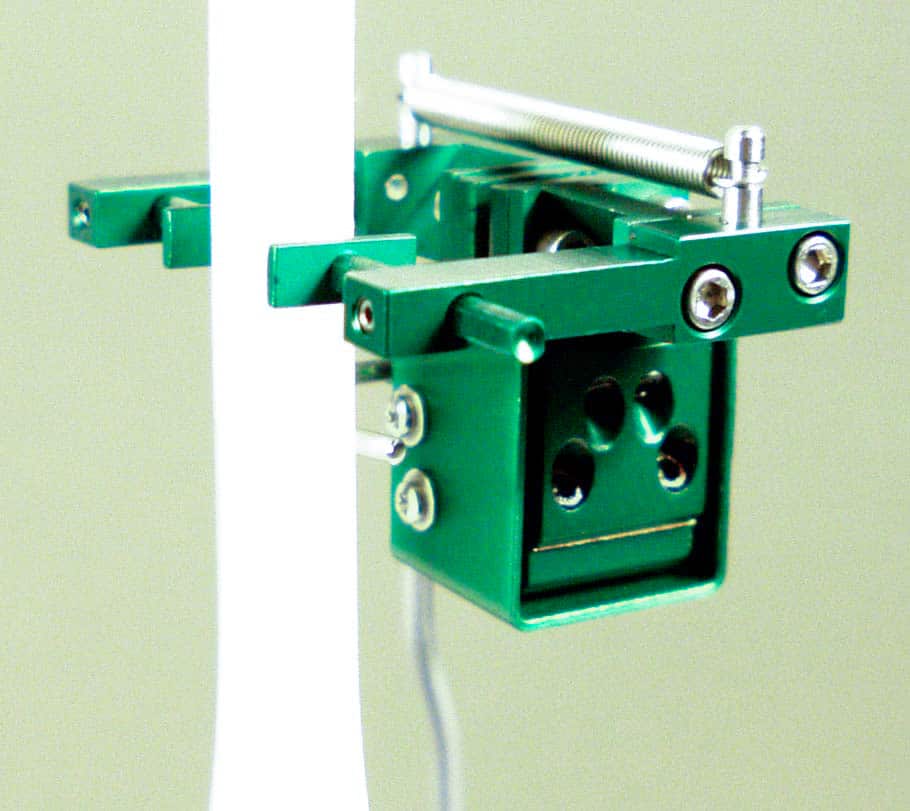
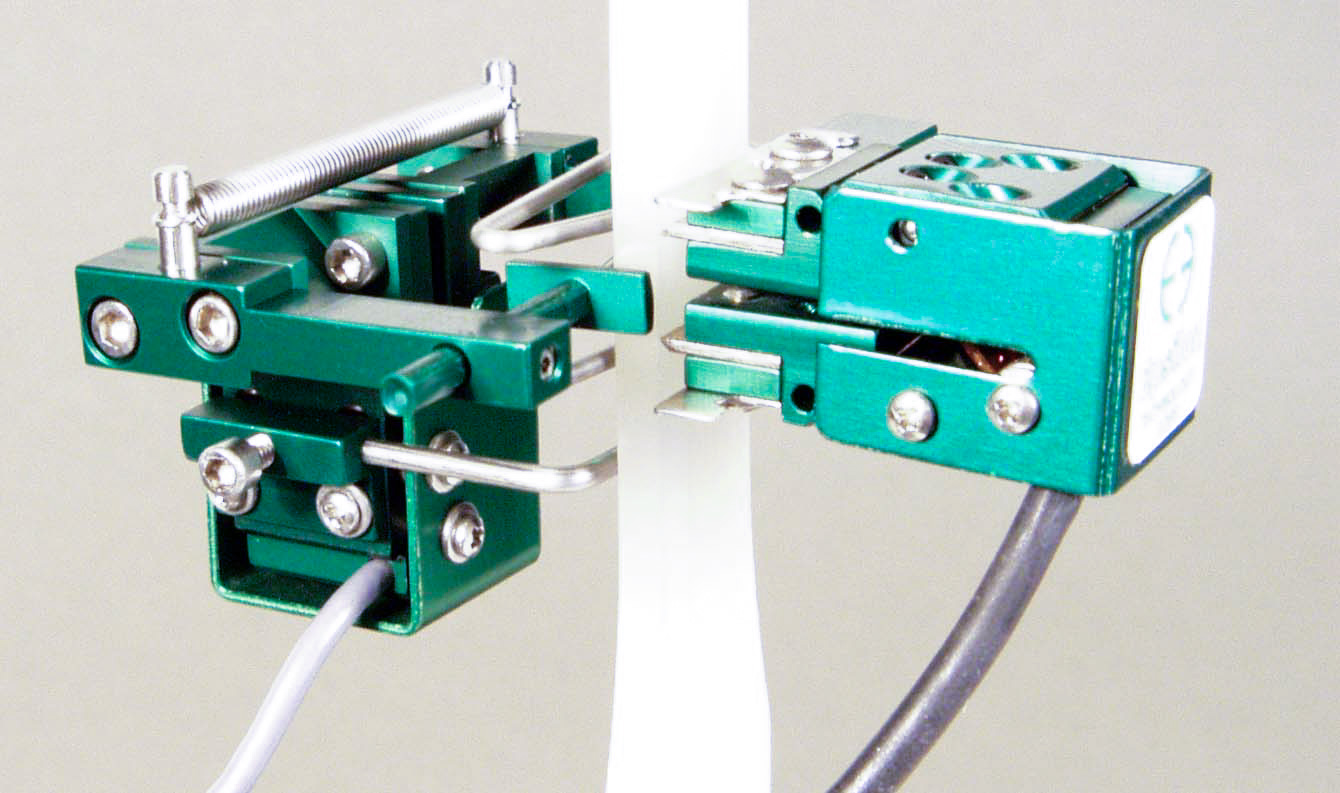
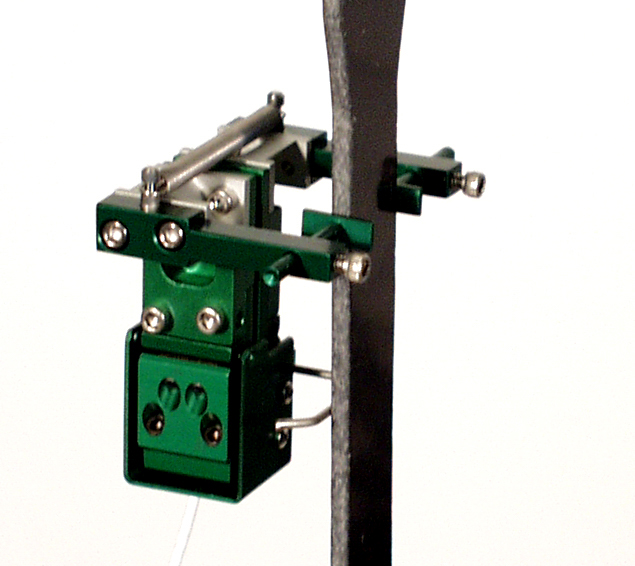
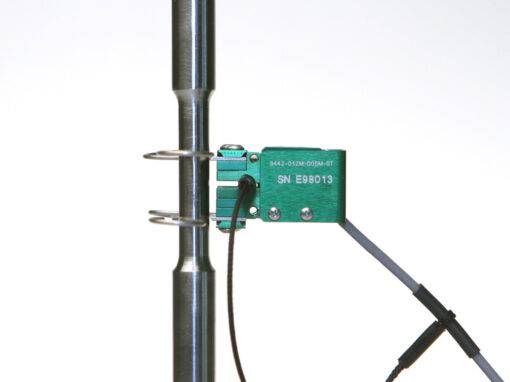
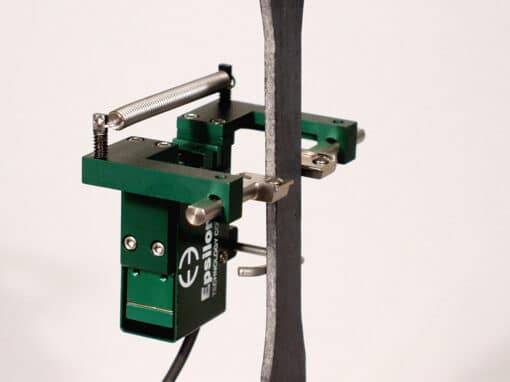
This model clips easily onto the sample with an integral spring to hold the unit in place. It can be adjusted to work on any size sample from 0 to 25 mm (0-1 inch) width or diameter. The Model 3475 has an arm thickness of only 3.81 mm (0.15 inches), and will work simultaneously with any axial extensometer having sufficient clearance between arms (not all versions of the 3442 miniature extensometer can be used). Large radius contacts prevent the unit from digging into the samples. This model utilizes Epsilon’s dual flexure design, allowing use in dynamic applications. All units have measuring ranges in both directions.
The Model 3475 extensometers are strain gaged devices, making them compatible with any electronics designed for strain gaged transducers. Most often they are connected to a test machine controller. The signal conditioning electronics for the extensometer is typically included with the test machine controller or may often be added. In this case the extensometer is shipped with the proper connector and wiring to plug directly into the electronics. For systems lacking the required electronics, Epsilon can provide a variety of solutions, allowing the extensometer output to be connected to data acquisition boards, chart recorders or other equipment.
- May be left on through specimen failure.
- Full bridge, 350 ohm strain gaged design for compatibility with nearly any test system.
- All models will measure both positive and negative displacements.
- Easy to mount, with integral springs to keep the extensometer on the sample.
- Self-supporting on the specimen.
- All standard units have linearity readings of 0.20% or better.
- Redesigned zero pin makes calibration easier.
- Includes the Epsilon Shunt Calibration System for on-site electrical calibration.
- Rugged, dual flexure design for strength and improved performance. Much stronger than single flexure designs, this also allows cyclic testing at higher frequencies.
- Includes high quality foam lined case.
Specimen Size: Works with samples up to 25 mm (1 inch) width or diameter
Linearity: ≤0.20% of full scale measuring range
Temperature Range: Standard (-ST) is -40 °C to +100 °C (-40 °F to 210°F); see Ordering Information for additional ranges
Cable: Integral, ultra-flexible cable, 2.5 m (8 ft) standard
Excitation: 5 to 10 VDC recommended, 12 VDC or VAC max.
Output: 2 to 4 mV/V, nominal, depending on model

- Connectors to interface to nearly any brand of test equipment
Ordering Information
Click table options to configure
-
pMeasuring Range
Selecting Extensometer Measuring Range
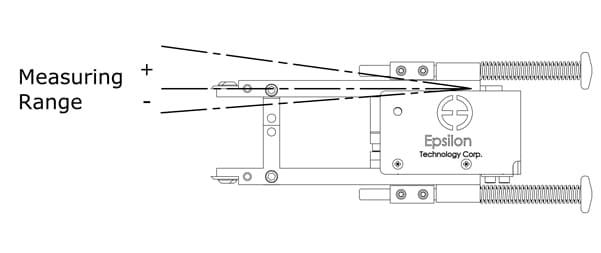
Measuring Range is the measuring capacity of the extensometer in tension (+) or compression (-) in units of % strain, maximum extension, or maximum deflection. When measuring range is in units of % strain, this means the maximum extension as a percentage of the gauge length.
Estimate the maximum strain or extension values you will need to measure, such as the total strain when the extensometer is removed after offset yield or the elongation at fracture. Then select a measuring range for the extensometer that meets or exceeds the requirements for the materials you are testing. If you are using a testing standard, also check the standard for extensometer requirements.
| mm or inches | # |
|---|---|
| ±0.50 mm | -050M |
| ±1.25 mm | -125M |
| ±0.020 in | -020T |
| ±0.050 in | -050T |
| degrees | # |
|---|---|
| -270 ˚C to 100 ˚C (-454 ˚F to 210 ˚F) | -LT |
| -40 ˚C to 100 ˚C (-40 ˚F to 210 ˚F) | -ST |
| -40 ˚C to 150 ˚C (-40 ˚F to 300 ˚F) | -HT1 |
| -40 ˚C to 200 ˚C (-40 ˚F to 400 ˚F) | -HT2 |
| -270 ˚C to 200 ˚C (-454 ˚F to 400 ˚F) | -LHT |
Related Models

Repairs/Service
If your unit is in need of service, calibration or repair, initiate the RMA process with us and we will be happy to assist.

Get Our Newsletter
Sign up for our newsletter to get the most up-to-date information on products and services.

Download Catalog
Our 2025 Extensometer Catalog, Version 111 is now available! Not finding something you’re looking for? Ask us about a custom quote.